🏠 HomeđŸŠē Bite IdentifierđŸ•ˇī¸ Spider IdentifierđŸĒ˛ Beetle IdentifierđŸĒ° Fly Identifier🐜 Ant Identifier🐝 Bee Identifier🟡 Wasp Identifier🐛 Caterpillar IdentifierđŸĻ‹ Butterfly Identifier🌙 Moth IdentifierđŸĻŸ Mosquito IdentifierđŸ•ˇī¸ Tick Identifierâ„šī¸ About Us📧 Contact🔒 Privacy Policyâš ī¸ Disclaimer
đŸŠē AI Bite Analysis â€ĸ Educational Only

Insect Bite Identifier

Upload a photo of a bite or sting for instant AI identification — including symptoms, first aid steps, disease risks, and exactly when to seek medical help.

âš ī¸ Medical Disclaimer: This tool is for educational purposes only. Always seek professional medical advice for serious symptoms. Call emergency services for severe reactions.
📸

Drop a photo of the bite area here

or click to browse

JPG, PNG, WEBP — max 10 MB
8
Bite Types Covered
Free
No Cost Ever
AI
Powered Analysis
âš ī¸
See Doctor for Severe Cases

Common Insect Bites & Stings Guide

Know what bit you, the risk level, symptoms, and exactly what to do

đŸĻŸ
Mosquito Bite
Low Risk
Appearance
Small round red bump, dark dot at center, itchy welt
Treatment
Cold compress, antihistamine cream, hydrocortisone lotion
Disease Risks
MalariaDengueZikaWest Nile Virus
🐝
Bee / Wasp Sting
Medium Risk
Appearance
Red swollen area with white center, stinger may be visible
Treatment
Remove stinger, ice pack, antihistamine, monitor for allergy
Disease Risks
Anaphylaxis (if allergic)
đŸ•ˇī¸
Spider Bite
High Risk
Appearance
Two small puncture marks, redness, possible blistering or necrosis
Treatment
Clean wound, ice, seek immediate medical care for venomous species
Disease Risks
Necrosis (Brown Recluse)Severe pain (Black Widow)
đŸĻ 
Tick Bite
High Risk
Appearance
Small red mark or bull's-eye rash, tick may still be attached
Treatment
Remove tick with fine-tip tweezers, clean area, see doctor for testing
Disease Risks
Lyme DiseaseRocky Mountain Spotted FeverEhrlichiosis
🐜
Fire Ant Sting
Medium Risk
Appearance
Cluster of white pustules within 24 hours, intense burning itch
Treatment
Do not burst blisters, antihistamine, cold compress, see doctor if severe
Disease Risks
Anaphylaxis (rare)
đŸ›ī¸
Bed Bug Bite
Low Risk
Appearance
Small red welts in a straight line or cluster on exposed skin
Treatment
Soap and water, antihistamine cream, treat home infestation
Disease Risks
No diseases transmitted
🐾
Flea Bite
Low Risk
Appearance
Tiny red spots in groups of 3, often around ankles and feet
Treatment
Antihistamine, calamine lotion, treat pets and home for fleas
Disease Risks
TyphusPlague (very rare)
⚡
Hornet Sting
High Risk
Appearance
Raised red welt, large swelling, immediate sharp burning pain
Treatment
Ice pack, antihistamine, emergency care if allergic reaction occurs
Disease Risks
Anaphylaxis (if allergic)

How to Identify Insect Bites and Stings

Identifying the source of a bite or sting quickly is essential — different insects require completely different treatment approaches. Most bites from mosquitoes, ants, and fleas are harmless and resolve within days. However, bites from spiders, ticks, and stings from bees or wasps may require prompt medical attention, especially in individuals who are allergic.
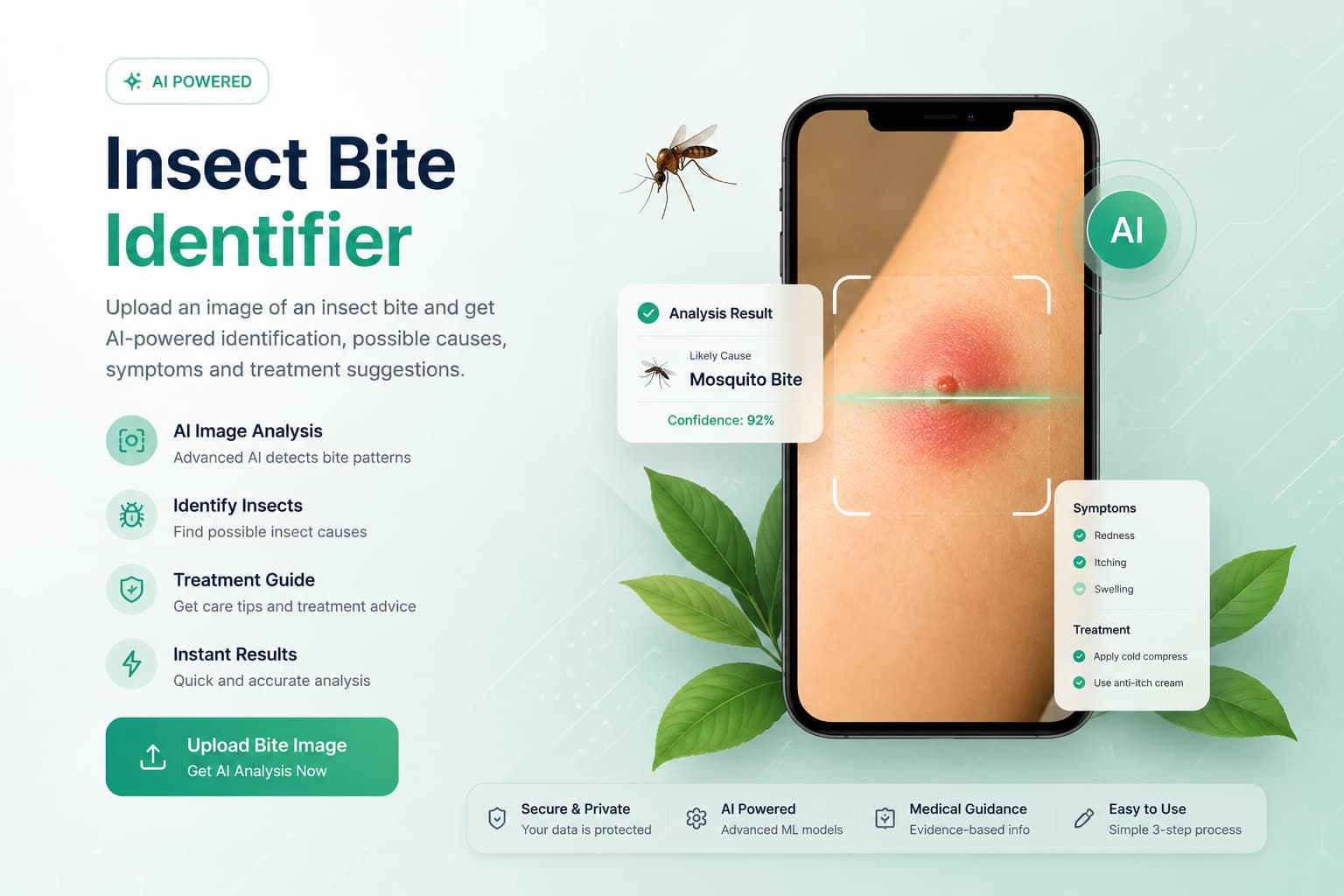
Insect bite identification guide

Key visual indicators our AI looks for include: the number and pattern of marks (single vs. clusters or rows), the shape and color of the welt, whether a stinger or tick remains embedded, and the appearance of the surrounding skin reaction. The more clearly you can photograph these features, the more accurate the identification will be.

When Is an Insect Bite a Medical Emergency?

Call emergency services immediately if you or someone nearby experiences difficulty breathing or swallowing, swelling of the face, lips, throat, or tongue, a rapid or irregular heartbeat, severe dizziness or fainting, a widespread rash or hives across the body, or loss of consciousness after a sting or bite. These symptoms indicate anaphylaxis — a potentially fatal allergic reaction that requires immediate epinephrine (EpiPen) treatment and emergency medical care.

Tick Bites and Lyme Disease — What to Know

For tick bites, watch carefully for a bull's-eye rash (erythema migrans) in the days following the bite — this circular red rash expanding outward from the bite site is a hallmark sign of Lyme disease that requires immediate antibiotic treatment. Early-stage Lyme disease is highly treatable, but if left untreated it can cause serious joint, heart, and neurological complications. See a doctor within 48 hours of any tick bite for proper evaluation and testing.

Frequently Asked Questions

Common questions about our Insect Bite Identifier

How do I identify what bit me?â–ŧ
Is the bite identifier medically accurate?â–ŧ
When should I go to the emergency room?â–ŧ
What if the tick is still attached?â–ŧ
How do I tell a spider bite from a mosquito bite?â–ŧ